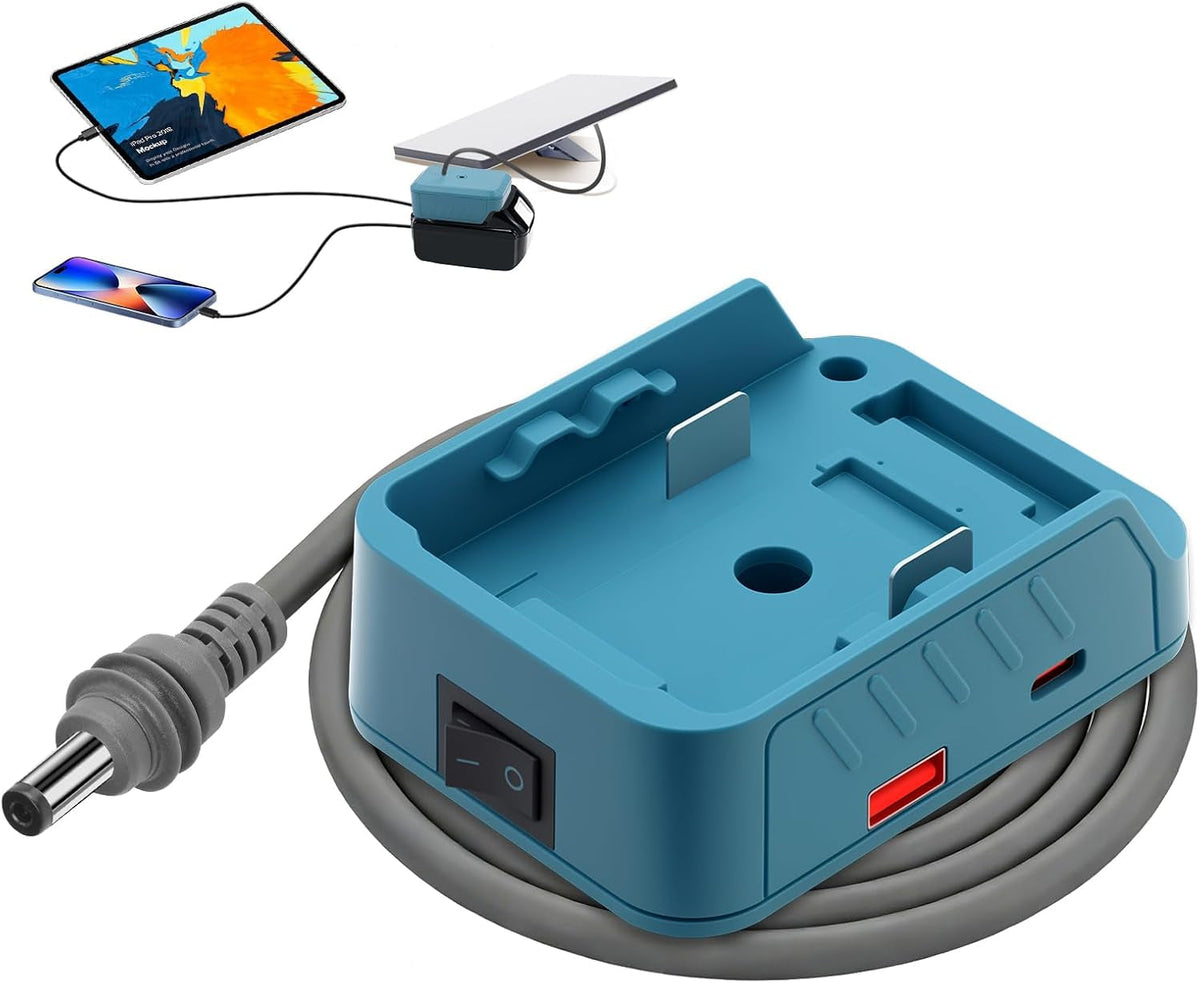
One of the biggest advantages of the Starlink Mini is how little power it needs compared with full size dishes. That makes it practical to run from a vehicle, a portable battery or even a power tool pack. This guide explains how much power the Mini uses, the main ways to supply it and how to estimate runtime.
How much power does the Mini use?
Starlink's published specifications put the Mini's average consumption at roughly 25 to 40 watts, with a DC input rated at 12 to 48V and 60W. Actual draw varies with weather, obstructions, network activity and temperature, so plan for the top of that range when sizing a battery.
Option 1: vehicle 12V
A 12V socket or hard wired 12V supply is the most common off grid source. Because vehicle voltage drops when the engine is off and fluctuates while running, many owners use a step up converter that delivers a steady higher voltage to the dish. Popular choices include the Mini Car Adapter with 30V Step Up Converter and the 12V to 30V Step Up Converter. For neat permanent installs, pair them with a waterproof rocker switch so you can cut power without unplugging.
Option 2: USB C
The Mini can also be powered over USB C from a Power Delivery source that can supply enough wattage, typically a 100W capable charger, power bank or power station port with a suitable cable. Lower rated USB C chargers may not keep the dish running reliably. A multi option lead such as the 3 in 1 Power Cable gives you car, USB C and DC options in one kit.
Option 3: portable batteries and power stations
Dedicated Mini batteries are the simplest grab and go option. See the 99Wh Power Bank, the 166Wh Battery Pack with Tripod and the 189Wh Power Station with Tripod. If you already own cordless tools, our guide to running Starlink Mini on power tool batteries covers that route.
Estimating runtime
A simple rule of thumb: divide the battery's watt hours by the dish's draw, then allow for conversion losses of around 10 to 20 percent.
- 99Wh battery: roughly 2 to 3.5 hours at 25 to 40W after losses.
- 166Wh battery: roughly 3.5 to 6 hours.
- 189Wh power station: roughly 4 to 7 hours.
- Heavy use or cold weather can push draw higher and shorten runtime.
These are estimates, not guarantees. Test your own setup before relying on it.
Safety basics
- Use cables and converters rated for the current they carry, and fuse hard wired circuits.
- Keep connections dry and protected from rain and spray.
- Switch off or disconnect when not in use to avoid draining your starter battery.
- Follow airline rules when flying with batteries. Packs up to 100Wh are generally allowed in carry on luggage, but check with your airline.
Browse the full Power and 12V collection for every option, or contact the Low Orbit Supply team if you want help planning a setup.
Starlink is a trademark of SpaceX. Low Orbit Supply is an independent retailer and is not affiliated with or endorsed by SpaceX. Always follow Starlink's own installation and safety guidance and your Starlink plan terms.